A satisfied ACI customer
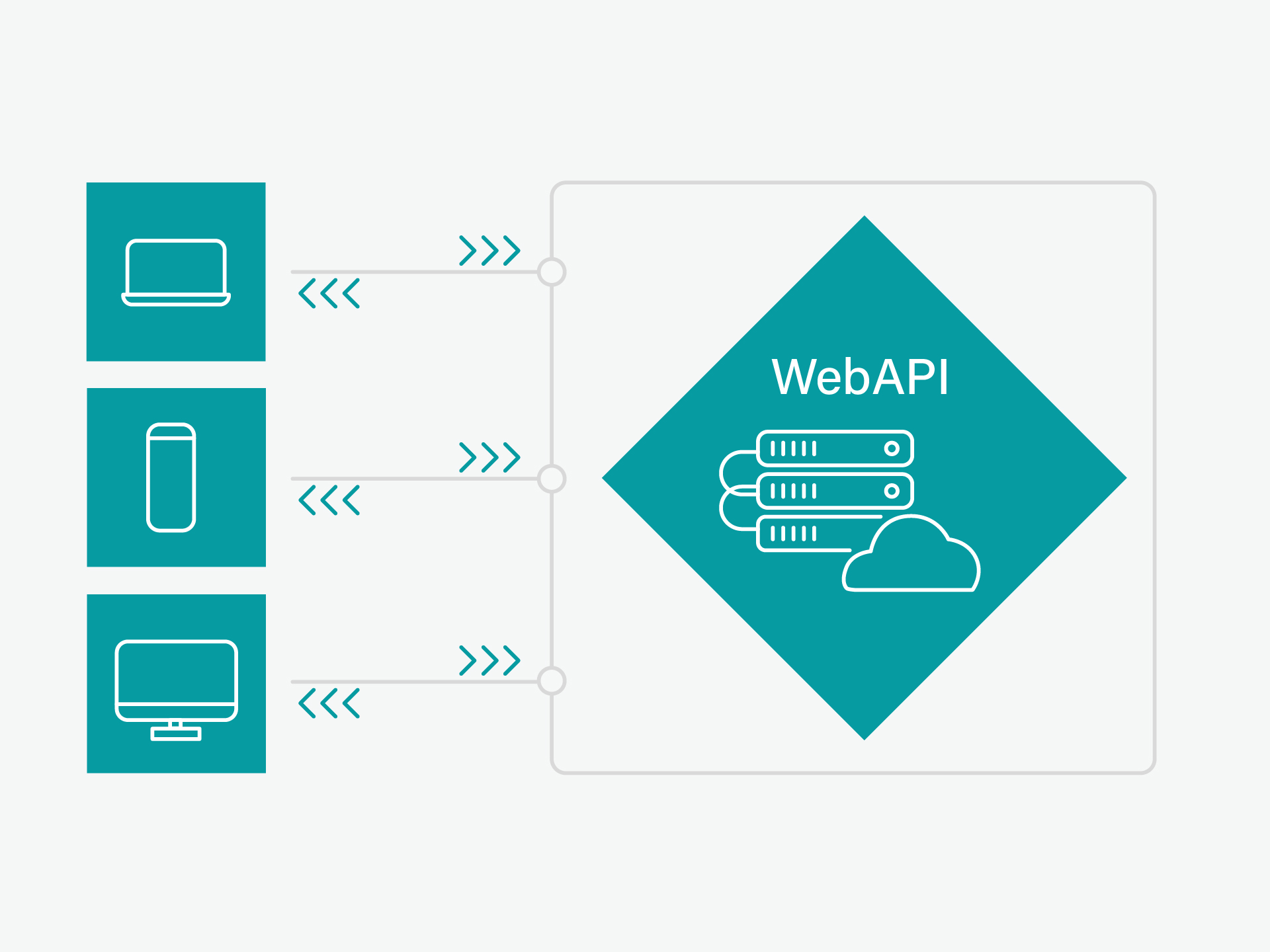
The WebAPI plugin for Magic Mark provides a flexible interface for external control, variable management, layout visualization, and event transmission via an integrated HTTP server.
The Magic Mark laser software already offers a wide range of functions for creating, controlling, and outputting laser markings. Plugins can be used to expand the software’s capabilities for specific applications such as data integration, automation, image recognition, or special layout requirements. This allows processes to be designed more efficiently, laser systems to be used more flexibly, and solutions to be tailored precisely to specific applications.
Expand Magic Mark Modularly
The more customized the application, the more important it is to have the right software feature. The Magic Mark plugins are organized into the categories of Control, Graphics, and Modifiers, and show at a glance which extensions automate processes, make marking layouts more flexible, or allow for targeted customization of existing graphic elements.
| Plugin Name | Function | Included in Magic Mark |
|---|---|---|
| WebAPI Plugin | Interface | Optionally available |
| Data Import Plugin | Data Import & Variable Management | Optionally available |
| OPC-UA Plugin | Data Exchange | Optionally available |
| GS1 Builder | GS1 DataMatrix Codes | Optionally available |
| AOI Plugin | Image Recognition | Included with the AOI Vision System |
| Control Plugin | Process Control | Optionally available |
| Sockets Plugin | Device Communication | Optionally available |
| Auto Focus Plugin | Automatic Focusing | Optionally available |
| Foil Star Plugin | Foil Handling | Included with the Foil Star |
| Liftboy | Z-Axis Control | Optionally available |
sehr gut
gut
ungeeignet
| Plugin Name | Function | Included in Magic Mark |
|---|---|---|
| Ruler Scale Plugin | Scale marking | Optionally available |
| Las File Quick Select | Layout Quick Select | Optionally available |
| Character-to-DXF | Character Encoding | Optionally available |
| Plugin Name | Function | Included in Magic Mark |
|---|---|---|
| Contour Tool | Contours & Fills | Optionally available * |
| Text Path | Text Alignment Along Paths | Optionally available |
| OCR Plugin | OCR-A/OCR-B Fonts | Optionally available |
* Fills from the Contour Tool are included in the standard version of Magic Mark
Applications & Processes
Not every application has the same requirements for labeling software. In some processes, data must be provided automatically; in others, the focus is on image recognition, device connectivity, or special layout functions. Magic Mark Plugins specifically extend the software with the features required for your application.
The WebAPI plugin for Magic Mark provides a flexible interface for external control, variable management, layout visualization, and event transmission via an integrated HTTP server.
With the Data Import Plugin, data from databases, ERP, CRM, and MES systems, as well as CSV and XML files, can be imported directly into the labeling process. This allows variable content to be provided automatically and reduces the need for manual entry. The Data Import Plugin features a standardized interface (REST API) that enables platform- and programming language-independent communication via HTTP from within Magic Mark.
The OPC-UA plugin ensures reliable communication between various OPC-UA-enabled systems. It enables the secure exchange and provision of data and functions as either a client or a server.
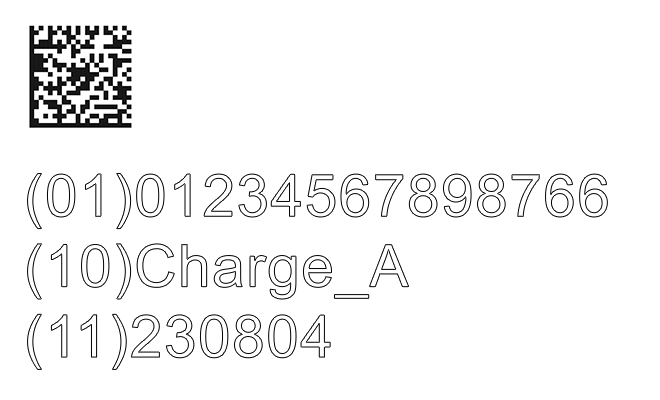
The GS1 Builder helps you create DataMatrix codes with a valid GS1 data structure. This allows you to prepare labels for traceable products in accordance with industry standards and use them directly in Magic Mark.
The AOI plugin adds image processing capabilities to Magic Mark. Objects, text, and codes can be automatically detected, analyzed, and used for precise alignment of the laser marking.
Using the Sockets Plugin and the Control Plugin, external devices such as ID readers, camera systems, power supplies, or other IP-controllable components can be integrated into the marking process. This allows workflows to be controlled and automated directly from within Magic Mark.
Plugins such as Contour Tool, Text Path, Character-to-DXF, Ruler Scale, and OCR Plugin expand the design possibilities in Magic Mark. They allow you to create contours, paths, scales, special characters, or point-based OCR fonts directly within the marking layout.
Plugins such as Foil Star, Liftboy, and Control Plugin provide support for recurring process steps, such as foil handling, Z-axis control, or simple control sequences. This makes marking processes more efficient and reproducible.
The WebAPI plugin provides access to the Magic Mark interfaces via a built-in HTTP server. This allows external applications, manufacturing control systems, or scripts to call functions from LaserControl, ScannerControl, and Workstation via HTTP. In addition, the plugin provides its own variables that can be used in Magic Mark layouts.
With the Data Import plugin, you can import data from databases, ERP or MES systems, as well as CSV, TXT, or XML files, directly into Magic Mark. This automatically provides variable content such as serial numbers, batch numbers, or part numbers for laser marking.
Our OPC UA plugin connects industrial plants, machines, and software via a uniform and secure communication standard. It can both read and monitor data from other OPC UA systems and provide structured data and functions to higher-level systems. This means the OPC UA plugin can be used as both a client and a server.
With the GS1 Builder, you can create DataMatrix codes with a valid GS1 data structure directly in Magic Mark. The plugin supports standard-compliant product labeling and simplifies the implementation of traceable labels.
The AOI plugin extends Magic Mark with image processing and analysis capabilities. Objects, text, and codes can be automatically detected, identified, and used for precise alignment and inspection of the laser marking.
The Control plugin allows you to control external devices and processes directly from within Magic Mark. This enables you to automate marking processes and integrate additional components into the workflow.
The Sockets plugin enables communication between Magic Mark and external devices via network connections. This allows information to be exchanged and automated workflows to be implemented with camera systems, readers, or other components.
The Contour Tool automatically detects contours in graphics and uses them for laser marking. This allows existing drawings, logos, or graphic elements to be efficiently prepared for the marking process.
The Text Path plugin allows you to place text along any lines, circles, or contours. This makes it possible to flexibly adapt labels to part geometries and specific layout requirements.
With Character-to-DXF, characters and symbols can be integrated into marking layouts as DXF graphics. This allows custom characters, logos, or special marking elements to be used flexibly for laser marking.
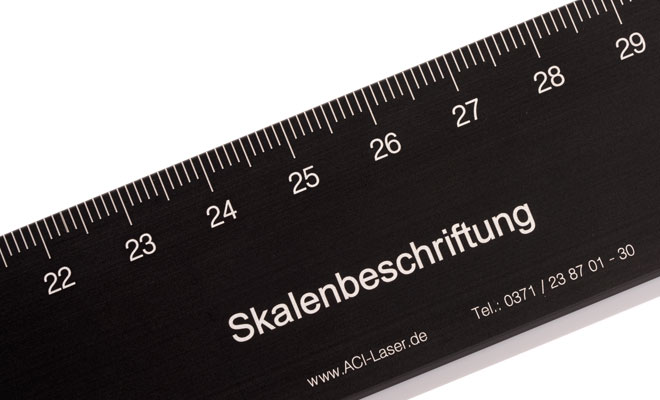
The Ruler Scale plugin helps you create scales, graduations, and measurement marks. This allows you to efficiently generate scale labels for technical components and measurement applications.
The OCR plugin allows OCR-A and OCR-B fonts to be integrated directly into marking layouts. This makes it possible to create markings that are optimized for automatic character recognition by downstream reading and verification systems.
The Auto Focus plugin automatically adjusts the laser's focus to accommodate different component heights. This ensures reproducible marking results and reduces the need for manual adjustments.
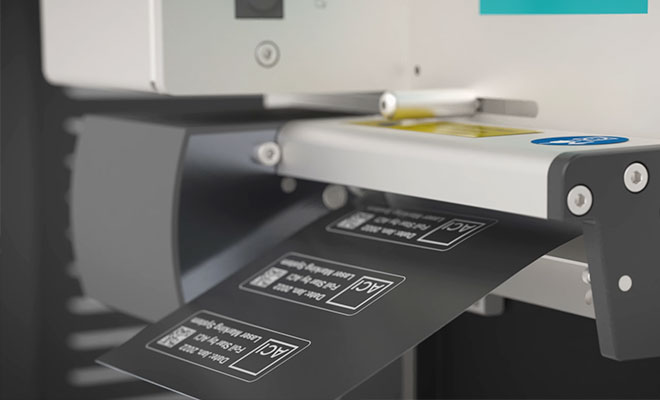
The Foil Star plugin is used to connect to and control the Foil Star film-handling system directly from Magic Mark. Foil transport and the labeling process are controlled centrally via the labeling software, and labeling templates are processed fully automatically.
The Liftboy plugin allows motorized Z-axes to be controlled directly via Magic Mark. This makes it easy to compensate for different workpiece heights and reduces setup times.
With Las File Quick Select, you can quickly select and load pre-prepared labeling files. This makes it easier to switch between recurring labeling tasks and supports efficient workflows.
Various plugins are available for Magic Mark that can be used to expand the labeling software’s capabilities depending on the application. These include, among others, the Data Import Plugin, GS1 Builder, AOI Plugin, Control Plugin, Sockets Plugin, Auto Focus Plugin, Foil Star Plugin, Liftboy, Las File Quick Select, Contour Tool, Text Path Plugin, Character-to-DXF, Ruler Scale Plugin, and the OCR Plugin.
The plugins support, among other things, data import, GS1 DataMatrix codes, image processing, automation, device communication, foil handling, Z-axis control, and special layout and graphics functions.
Yes, many Magic Mark plugins can also be retrofitted into existing installations. Whether retrofitting is possible depends on the version of Magic Mark being used, the laser system, and the specific hardware configuration. Typical extensions include, for example, plugins for data import, device communication, automation, auto focus, or Z-axis control.
This allows the marking software to be flexibly adapted to new requirements, processes, or additional hardware.
Several Magic Mark plugins are available for automating marking processes. Depending on the application, different extensions can be combined:
This allows for the extensive automation of data provision, system control, and marking processes.
Yes, the Data Import Plugin allows labeling data from external data sources to be imported into Magic Mark. These include, among others, ERP and MES systems, relational databases, and CSV, TXT, or XML files.
This makes it possible to automatically provide variable content—such as serial numbers, batch numbers, part numbers, or production data—for the marking process, thereby reducing the need for manual entry.
Yes, the AOI plugin provides a software extension for image processing and object recognition for Magic Mark. When used in conjunction with an AOI vision system, objects, text, and codes can be automatically detected, identified, and measured. The laser marking is then automatically aligned with the workpiece and verified after the marking process. In addition, the AOI plugin also supports applications in the field of optical character recognition (OCR).
For applications with traceability requirements, Magic Mark offers extensions for creating structured, standards-compliant labels. The GS1 Builder and the Data Import Plugin are particularly relevant: The GS1 Builder supports the creation of DataMatrix codes with a valid GS1 data structure, while the Data Import Plugin imports variable product and process data such as serial numbers, lots, part numbers, or order data from external data sources.
This allows product information to be captured in a standardized manner and uniquely assigned throughout the value chain. Depending on the application, the AOI Plugin can also be used to detect objects, text, and codes and to verify the markings after the marking process.
Press ENTER to confirm or press ESC to close